Nahant
One-deck wooden bulk freighter, 1873–1897
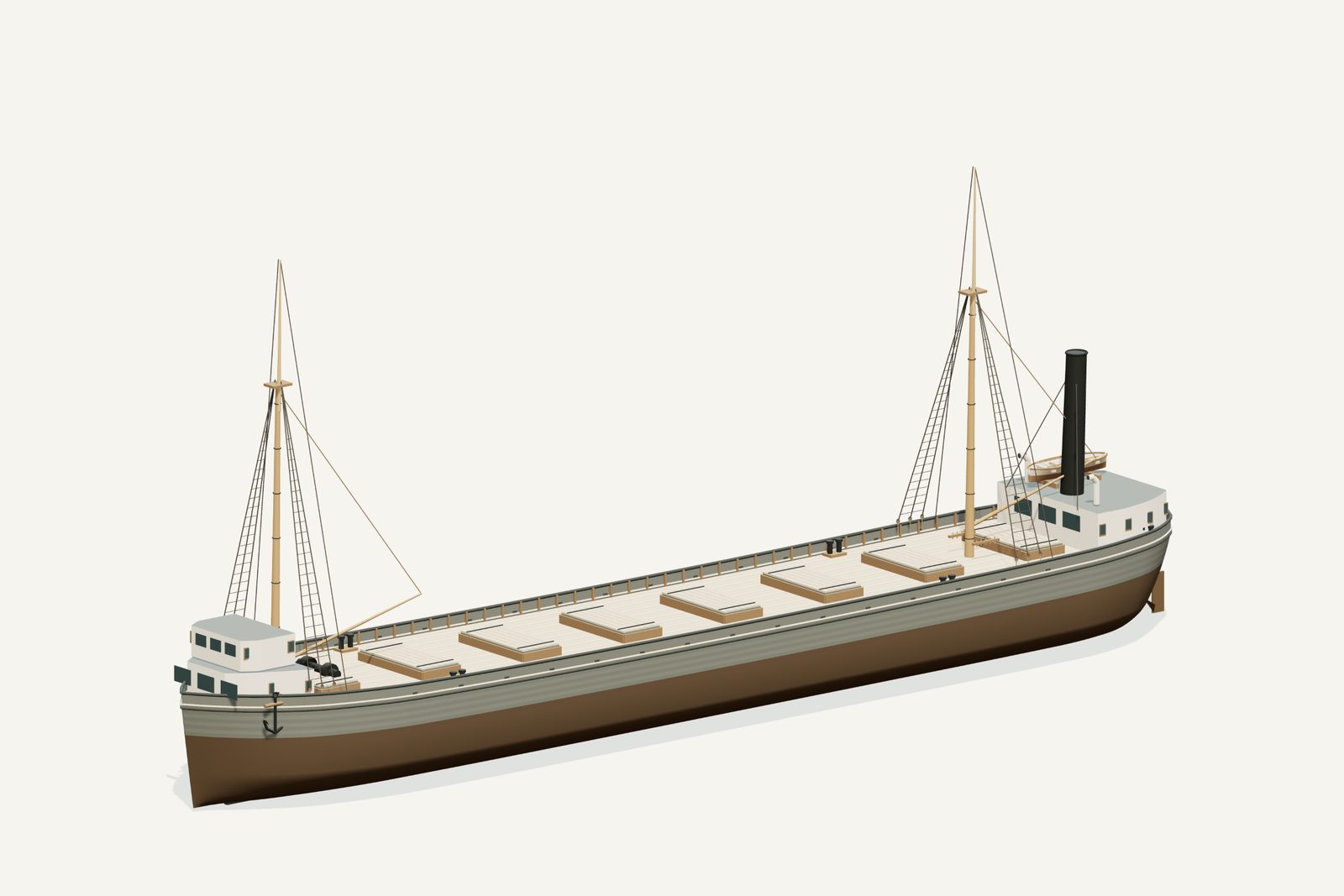
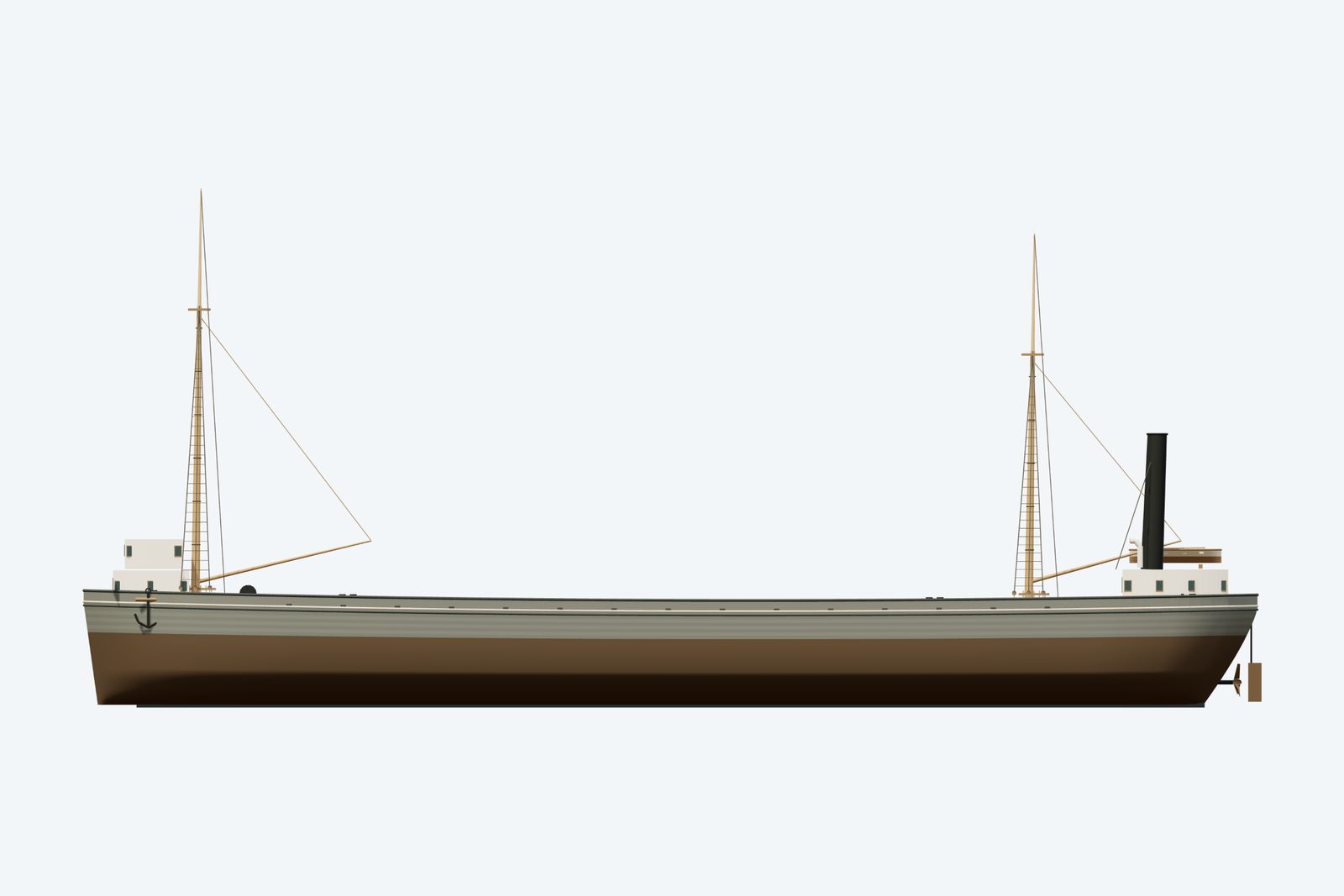
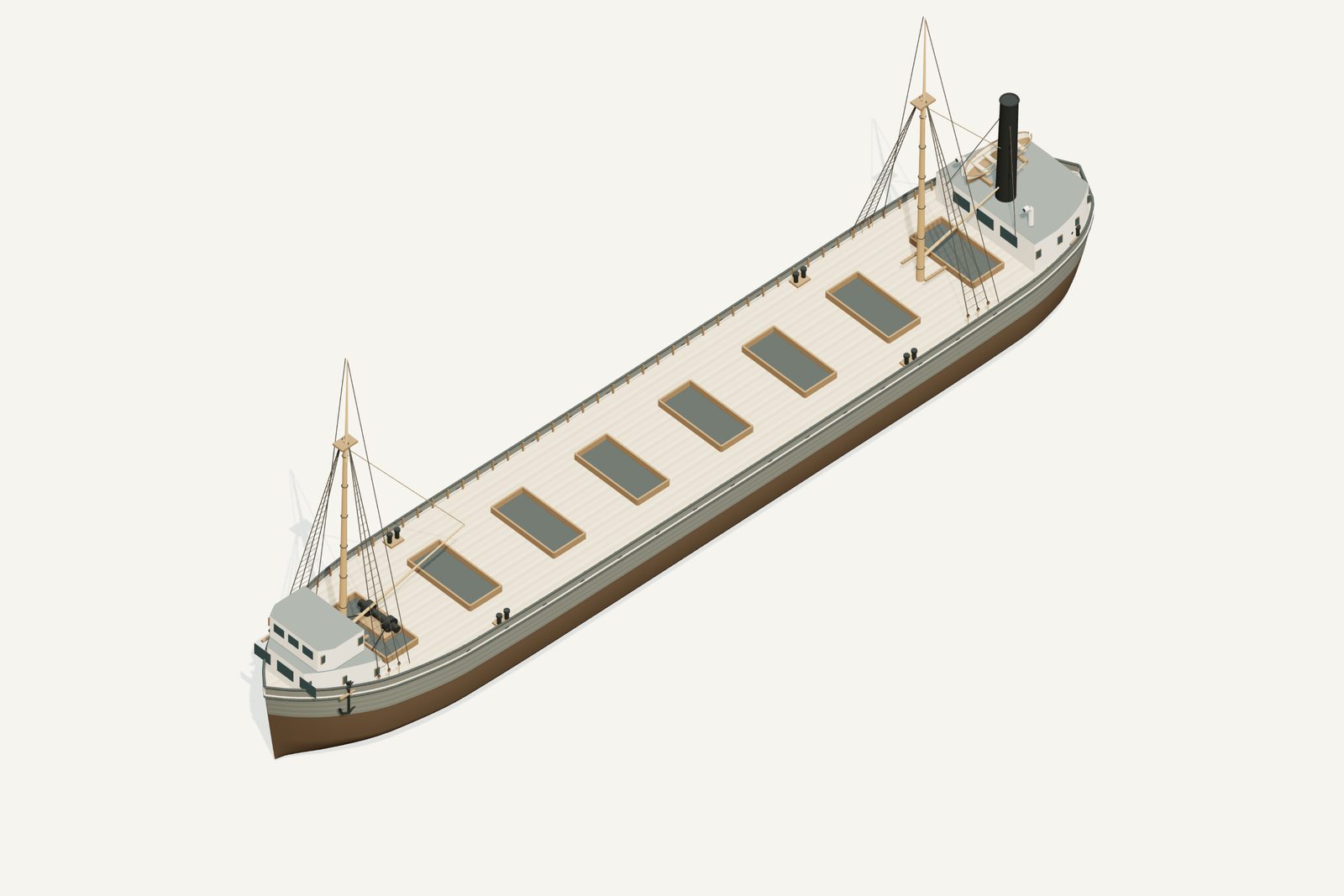
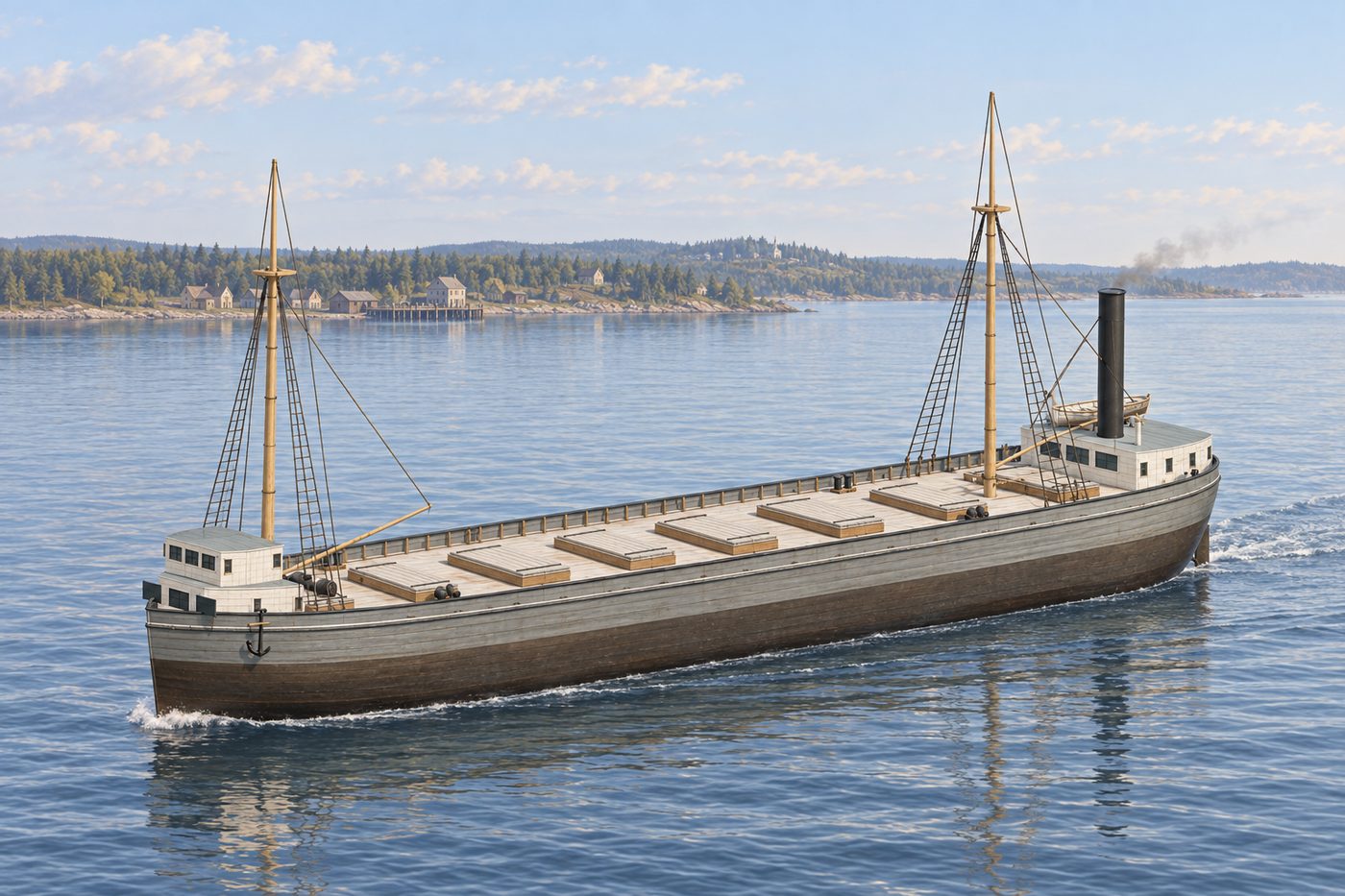
An interpretive 3D reconstruction of the vessel afloat, in the form named above and from before its loss in Little Bay de Noc. It is informed by the historical record set out under History below, where the documented evidence and the interpretation are kept apart; rigging, colours and fittings are partly inferred. It is not a survey of the wreck.
Nobody knows the exact spot where this ship went down, so the marker shows the general area.
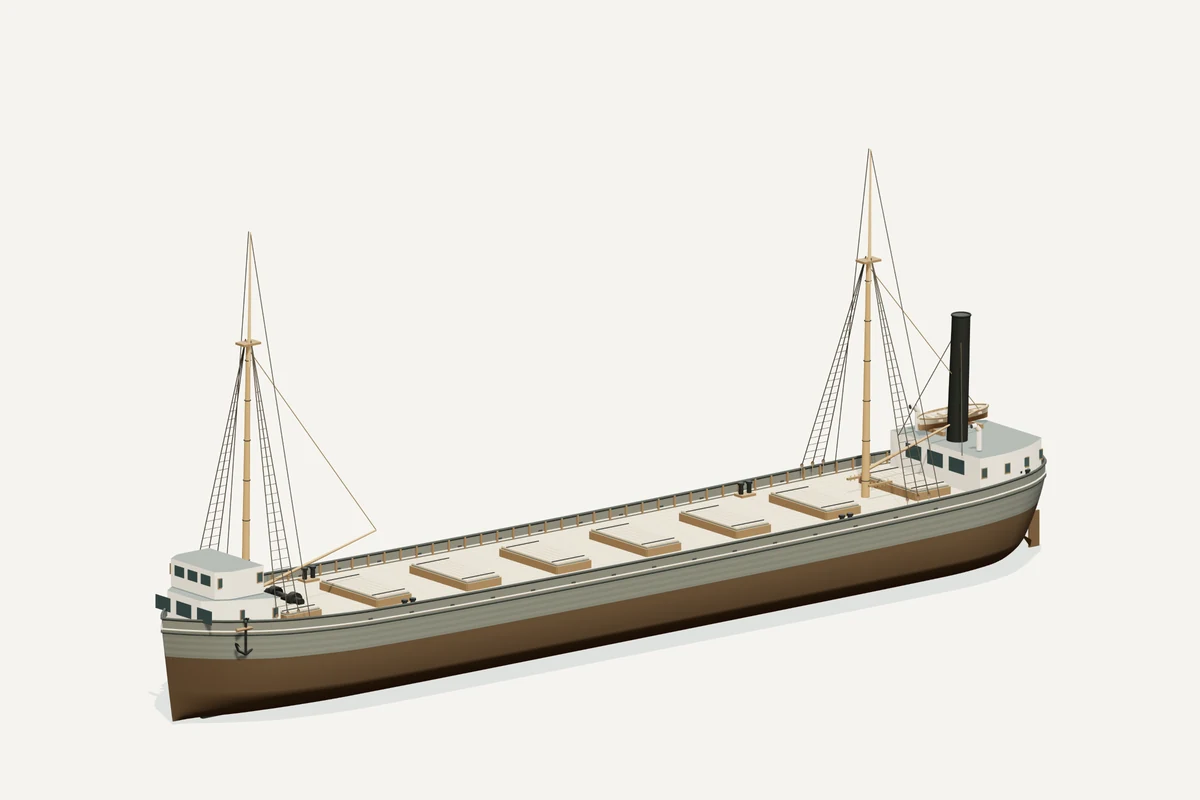
Starboard bow · complete vessel · drag to rotate, scroll or pinch to zoom, right-drag to pan. Hiding a part shows what sat beneath it; it does not recreate the wreck.
What the model represents
From the model specification. Two lists, kept apart on purpose.
Documented
- The enrollment-based history lists a wooden Great Lakes bulk freighter with one deck, built by George W. Jones at Detroit and launched April 24, 1873; US 18766, 213.3 × 35 × 16.2 ft. Great Lakes Vessel History.
- Nahant burned November 29, 1897 at Chicago & North Western ore dock no. 4, Escanaba, with iron ore aboard; the dock also burned. Vessel history.
- Swayze records two or three deaths. A contemporary report names Jacob Bossart and a deckhand, both of Cleveland. The former one-death catalogue value is not retained. Swayze N, Maritime History record 55897.
Inferred
- Eight low hatch covers, their spacing, two cargo masts, compact end houses and one aft funnel are inferred from contemporary wooden bulk carriers.
- D.M. Wilson is a vessel-class comparison, not a photographed Nahant. The cited NOAA page shows an underwater bow; no claim that it supplies an inspected afloat portrait is retained.
- Cabin windows, fittings, paint and loaded waterline are interpreted.
Configuration caveat. The enrollment record identifies a one-deck bulk freighter, rather than the catalogue’s package-boat label. Eight hatches, two cargo masts, compact houses and aft funnel are contemporary comparisons; no inspected own-vessel portrait fixes the arrangement. Deaths in the 1897 fire are reported as two or three.
A display assumption, not a measurement. The waterline toggle sits at 3.75 m above the keel, a display assumption, not a measured draft. The catalogue records no depth for this wreck; where a depth is known it describes the site, not the ship.
Renders from the model
History, evidence and limits
The research notes behind the reconstruction, reproduced with their citations.
Version 1.1. Revised September 8, 2026.
Selected appearance
One-deck wooden bulk freighter, 1873–1897. The enrollment-based classification is selected over the catalogue’s package-freighter label. The eight hatch covers and upper works are a comparative reconstruction, not an authenticated portrait.
Documented evidence
The enrollment-based history lists a wooden Great Lakes bulk freighter with one deck, built by George W. Jones at Detroit and launched April 24, 1873; US 18766, 213.3 × 35 × 16.2 ft. Great Lakes Vessel History.
Nahant burned November 29, 1897 at Chicago & North Western ore dock no. 4, Escanaba, with iron ore aboard; the dock also burned. Vessel history.
Swayze records two or three deaths. A contemporary report names Jacob Bossart and a deckhand, both of Cleveland. The former one-death catalogue value is not retained. Swayze N, Maritime History record 55897.
Reasonable interpretation
Eight low hatch covers, their spacing, two cargo masts, compact end houses and one aft funnel are inferred from contemporary wooden bulk carriers.
D.M. Wilson is a vessel-class comparison, not a photographed Nahant. The cited NOAA page shows an underwater bow; no claim that it supplies an inspected afloat portrait is retained.
Cabin windows, fittings, paint and loaded waterline are interpreted.
Unresolved uncertainties
No adequately attributable complete Nahant portrait was inspected. The model’s exact upper works therefore remain qualified.
George W. Jones is the enrollment-based builder; Swayze’s F. Jones is a conflicting abbreviated variant. Casualties remain two or three, not a resolved exact total.
Sources
Illustration conditions
Supplemental AI artwork is made from the revised model render where the model changed; the provenance records the actual input files. Lake, shore, sky and weather are artistic staging, not evidence of a final voyage or a measured location. The actual GLB and its direct renders are the geometry reference.
Sources used for the model
Rights and respect
Removing or disturbing wreckage on Great Lakes bottomlands is a felony under Michigan Part 761, 1994 PA 451, at a fair market value of $100 or more. Positions are historical reference only — not navigation and not dive-planning data. Wreck records are published by the Michigan Underwater Preserve Council.
Treat these as graves. Lives were lost on many Great Lakes wrecks and human remains may still be present. Look, photograph, and leave everything exactly as you found it.
Model and renders were newly made for this project (2026). Three.js r160.1 is used under the MIT licence; its notice ships with the vendored files. Wreck position, depth and dates: Michigan Underwater Preserve Council. The model specification (version 1.1, revised 2026-09-08) is published beside the assets (model-spec.json).