Fish
Grass Carp
Ctenopharyngodon idella
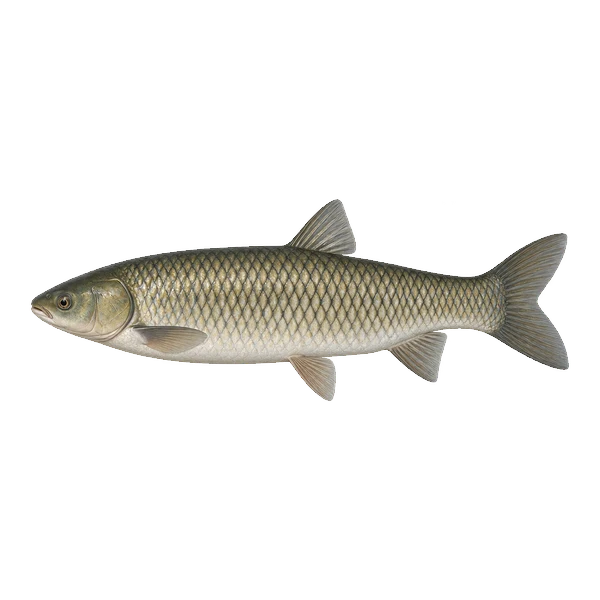
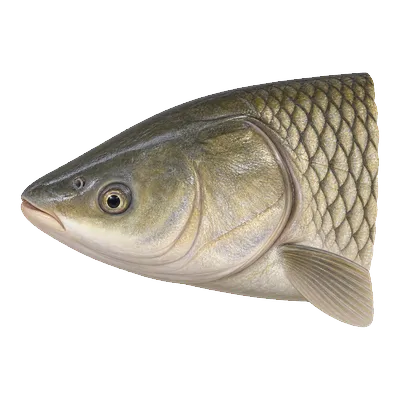
These illustrations are AI-generated, not photographs, and are not to scale. They show what to look for; they are not a substitute for an expert identification.
How to identify it
Size: Can grow very large. Michigan reports fish over 5 feet long.
- A long, torpedo-shaped body.
- Large scales with dark edges that give a cross-hatched look.
- A mouth at the front of the head with no barbels.
- A short fin on its back, set roughly above the belly fins.
- A small eye set low on the head, about level with the mouth.
Don’t confuse it with
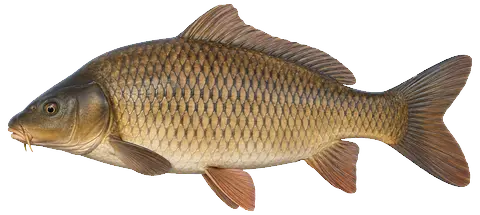
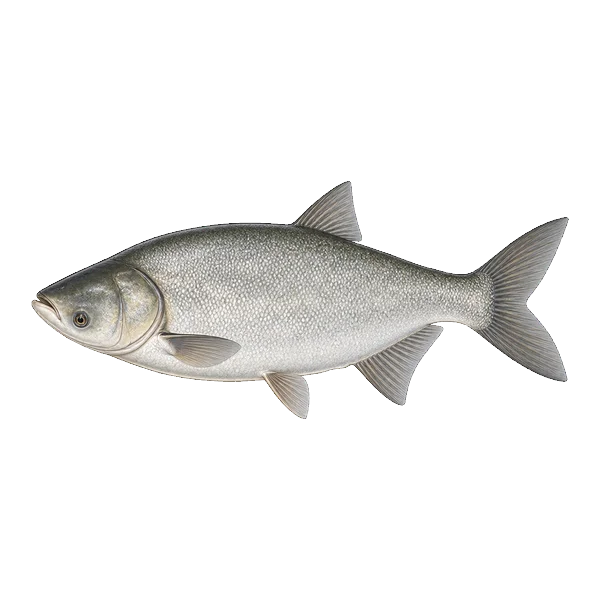
Common carp has barbels and a long fin on its back. Silver and bighead carp have much smaller scales and eyes set even lower. Native suckers have a mouth on the underside of the head.
The Michigan record behind this page is for a fertile (diploid) grass carp, the kind that can reproduce.
Where it came from
Native to eastern Asia.
Brought to the United States in the 1960s to control aquatic weeds. Fish able to reproduce escaped and spread in the Mississippi River basin and are now found in parts of the Great Lakes basin.
Earliest dated Michigan record: 1980, the Muskegon River basin, Newaygo County (recorded as stocked). This is the oldest dated record in the USGS non-native species database, not necessarily when it first arrived.
Why it matters
Grass carp eat huge amounts of aquatic plants. Losing those plants removes habitat that native fish, ducks and other wildlife depend on and can muddy the water. It is one of the invasive carp Michigan is working to keep out of the Great Lakes.
Michigan law
Prohibited under Part 413 of Michigan's Natural Resources and Environmental Protection Act. It is illegal to possess, introduce, import, sell or offer to sell it as a live organism, except in the limited cases the law allows. The state uses “prohibited” for species that are not yet widespread in Michigan. The state’s page on this species.
If you find it
- Don’t move it. Michigan law requires boaters to remove all aquatic plants from boats, equipment and trailers before launching. Before trailering, you must pull all drain plugs, drain live wells and bilges, and make sure the boat and trailer are free of aquatic plants and animals. What the law requires
- Never release bait. Releasing baitfish into Michigan waters is illegal. Put unused bait in the trash, never in the water.
- Report it. Take a photo, note where you saw it, and report it to the Midwest Invasive Species Information Network (MISIN) or through Michigan’s invasive species program. Experts there can confirm what you found.
- Ask before removing or treating. Treating a lake with herbicides or other chemicals needs a state permit, and some removal work does too. Start with the state’s Aquatic Nuisance Control program before taking action.
Michigan lakes where it has been recorded
1 Michigan lake on this site has a record of this species.
Muskegon
A lake that is not listed may still have it. Records exist only where someone found the species and reported it, so “not recorded” does not mean “not present.”
Lake records: Midwest Glacial Lakes Partnership Conservation Planner; underlying records from the USGS Nonindigenous Aquatic Species database.
Sources
- Michigan Invasive Species Program: Grass carp
- USGS Nonindigenous Aquatic Species: Grass carp fact sheet
- Michigan Compiled Laws, section 324.41302 (prohibited and restricted species)
Earliest dated record: USGS Nonindigenous Aquatic Species database.