Fish
Common Carp
Cyprinus carpio
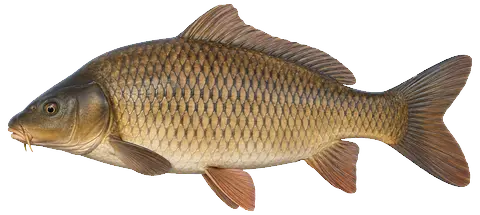
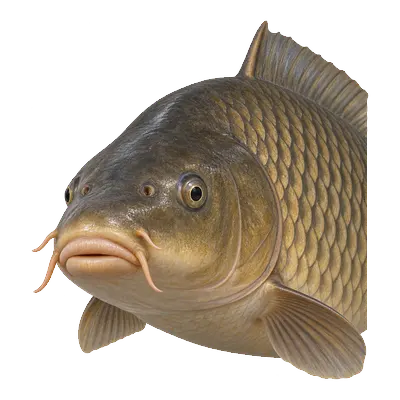
These illustrations are AI-generated, not photographs, and are not to scale. They show what to look for; they are not a substitute for an expert identification.
How to identify it
Size: Commonly 15 to 32 inches long.
- Two pairs of barbels (whiskers) on the upper jaw: a short pair and a longer pair at the corners of the mouth.
- Thick, rubbery lips that push out when it feeds.
- Large scales.
- A long fin on its back that starts with a stiff, spine-like ray.
Don’t confuse it with
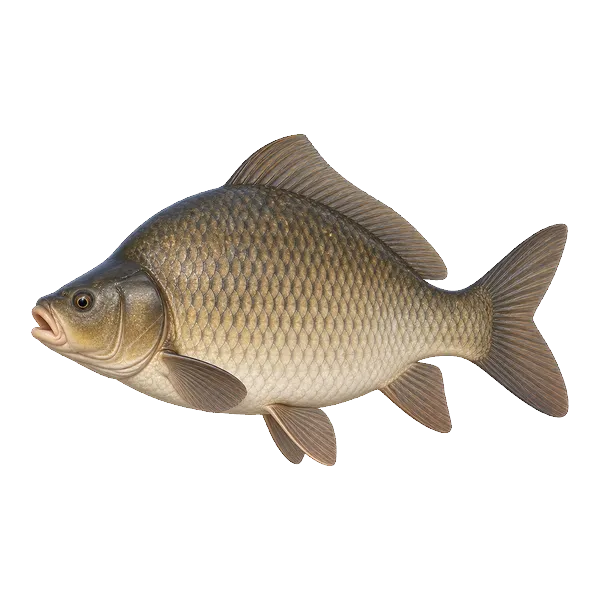
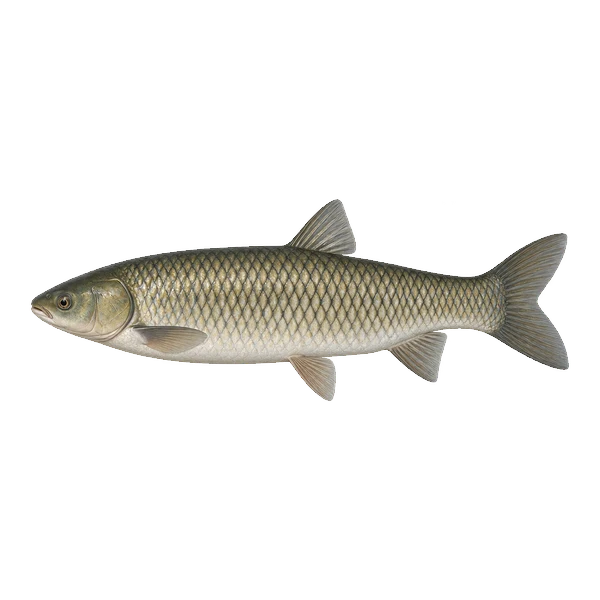
Native buffalo fish and suckers have no barbels, and neither do goldfish. Grass carp, also on this list, has no barbels and a short fin on its back. Koi are a colorful form of the common carp.
Where it came from
Native to Europe and Asia.
Stocked across the United States as a food fish in the late 1800s. It is now found throughout Michigan.
Earliest dated Michigan record: 1922, the Huron River below Geddes Dam, Washtenaw County. This is the oldest dated record in the USGS non-native species database, not necessarily when it first arrived.
Why it matters
Carp feed by rooting through the lake bottom, which muddies the water and uproots the plants that fish, ducks and other wildlife need.
Michigan law
Not on Michigan's list of prohibited or restricted species. The boating and bait rules below still apply to everyone. The state’s page on this species.
If you find it
- Don’t move it. Michigan law requires boaters to remove all aquatic plants from boats, equipment and trailers before launching. Before trailering, you must pull all drain plugs, drain live wells and bilges, and make sure the boat and trailer are free of aquatic plants and animals. What the law requires
- Never release bait. Releasing baitfish into Michigan waters is illegal. Put unused bait in the trash, never in the water.
- Report it. Take a photo, note where you saw it, and report it to the Midwest Invasive Species Information Network (MISIN) or through Michigan’s invasive species program. Experts there can confirm what you found.
- Ask before removing or treating. Treating a lake with herbicides or other chemicals needs a state permit, and some removal work does too. Start with the state’s Aquatic Nuisance Control program before taking action.
Michigan lakes where it has been recorded
32 Michigan lakes on this site have a record of this species.
Barry
Benzie
Branch
Cheboygan
Hillsdale
Houghton
Ingham
Ionia
Jackson
Kalamazoo
Keweenaw
Lapeer
Lenawee
Livingston
Mackinac
Manistee
Muskegon
Newaygo
Presque Isle
Roscommon
St. Joseph
Tuscola
Van Buren
A lake that is not listed may still have it. Records exist only where someone found the species and reported it, so “not recorded” does not mean “not present.”
Lake records: Midwest Glacial Lakes Partnership Conservation Planner; underlying records from the USGS Nonindigenous Aquatic Species database.
Sources
- Michigan DNR: Carp and suckers
- USGS Nonindigenous Aquatic Species: Common carp fact sheet
- U.S. Fish and Wildlife Service: Common carp risk screening summary
Earliest dated record: USGS Nonindigenous Aquatic Species database.