William Maxwell
Comparison-based fishing career, 1883–1908
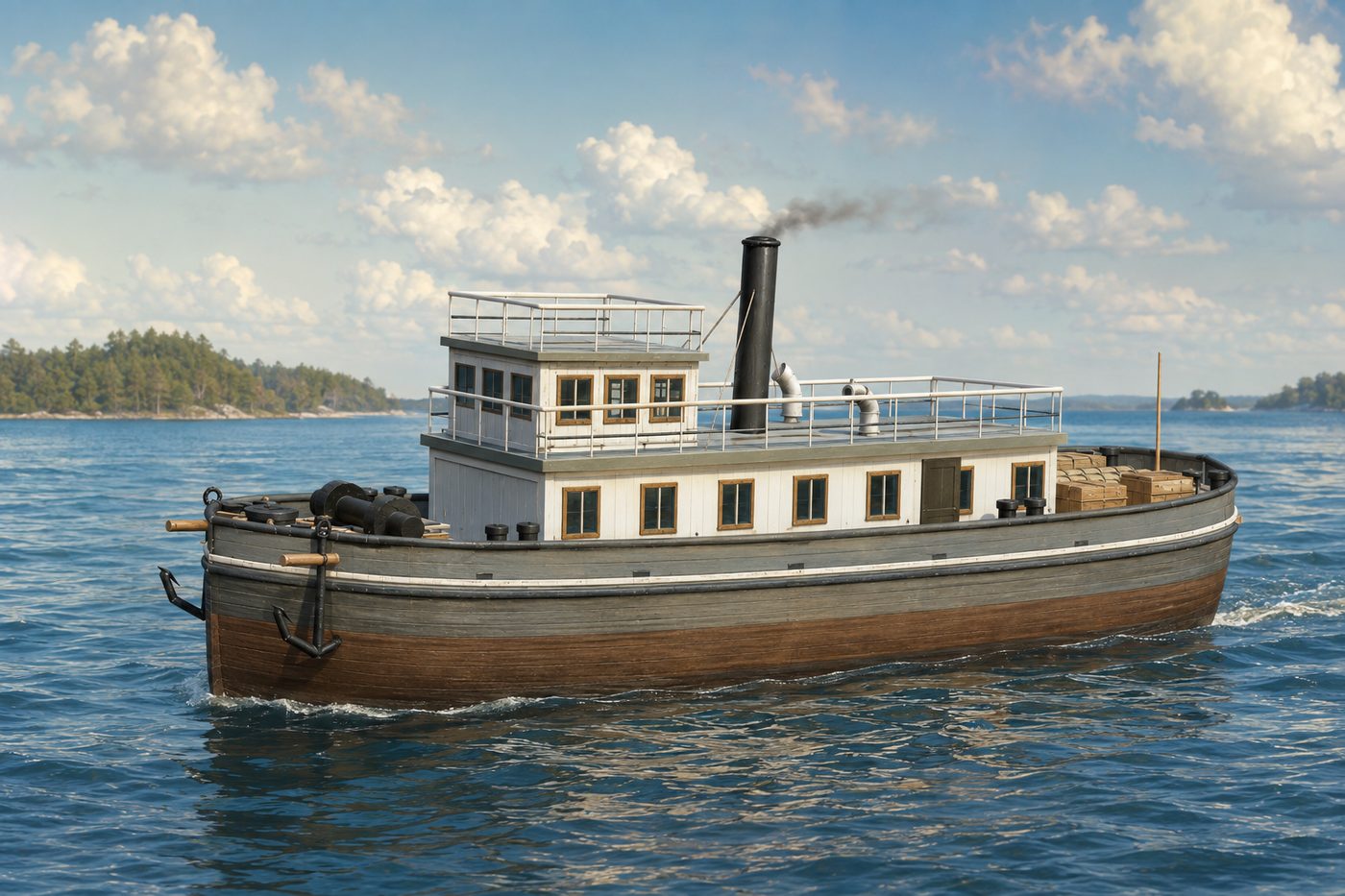
An interpretive 3D reconstruction of the vessel afloat, in the form named above and from before its loss in Thunder Bay. It is informed by the historical record set out under History below, where the documented evidence and the interpretation are kept apart; rigging, colours and fittings are partly inferred. It is not a survey of the wreck.
This ship ran aground along this shore. Nobody knows the exact spot, so the marker shows the general area.
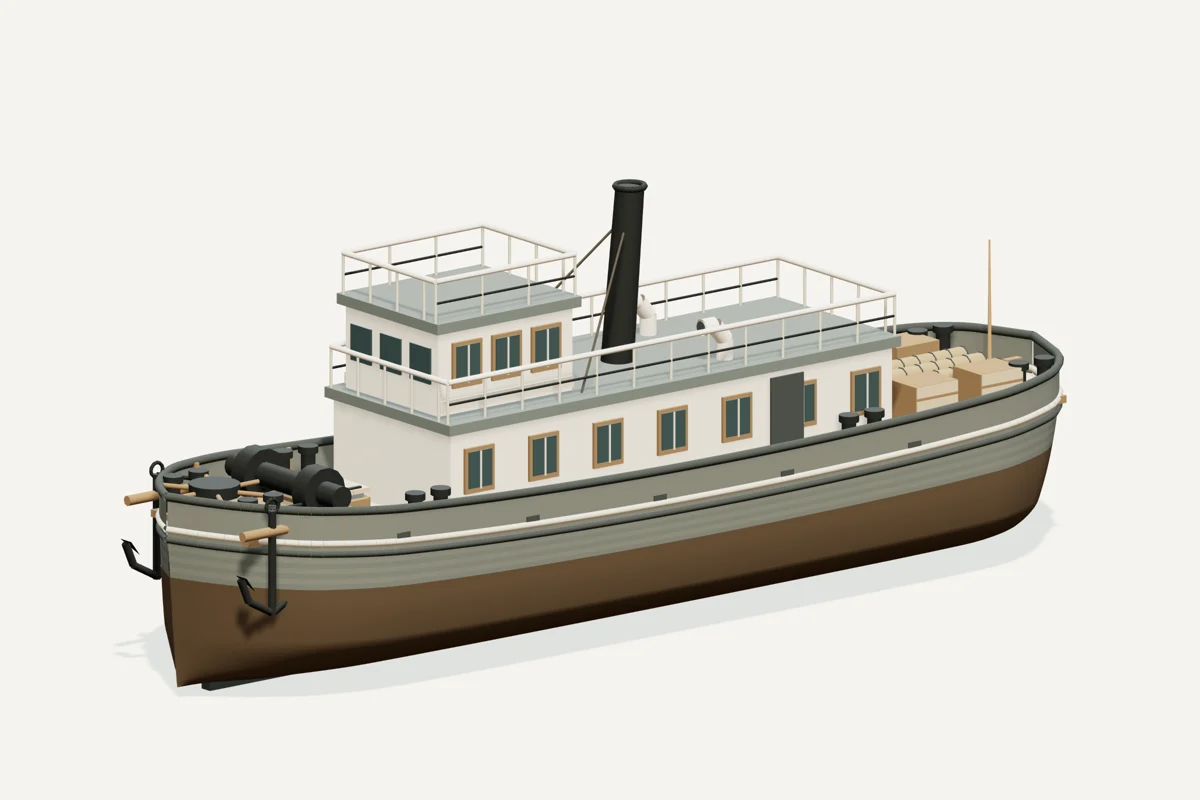
Starboard bow · complete vessel · drag to rotate, scroll or pinch to zoom, right-drag to pan. Hiding a part shows what sat beneath it; it does not recreate the wreck.
What the model represents
From the model specification. Two lists, kept apart on purpose.
Documented
- NOAA identifies an 1883 wooden screw fish tug, 67 ft long. NOAA vessel record
- A shaft and propeller survive; the 8 ft catalogue beam conflicts with the compilation’s 17 ft. NOAA vessel record
Inferred
- Underwater hull lines and draft
- Exact colors, fittings, hatch layout and rigging routes
Configuration caveat. A small wooden screw fish tug is documented. This uses the historical compilation’s 17 ft beam; NOAA lists 8 ft, an unresolved conflict. Cabin, funnel and working deck use a closely sized period fish-tug comparison, not a recovered portrait of Maxwell.
Two numbers that are not the same thing. The waterline toggle sits at 1.75 m above the keel, a display assumption, not a measured draft. The wreck lies in about 12 ft of water; that describes the site, not the ship.
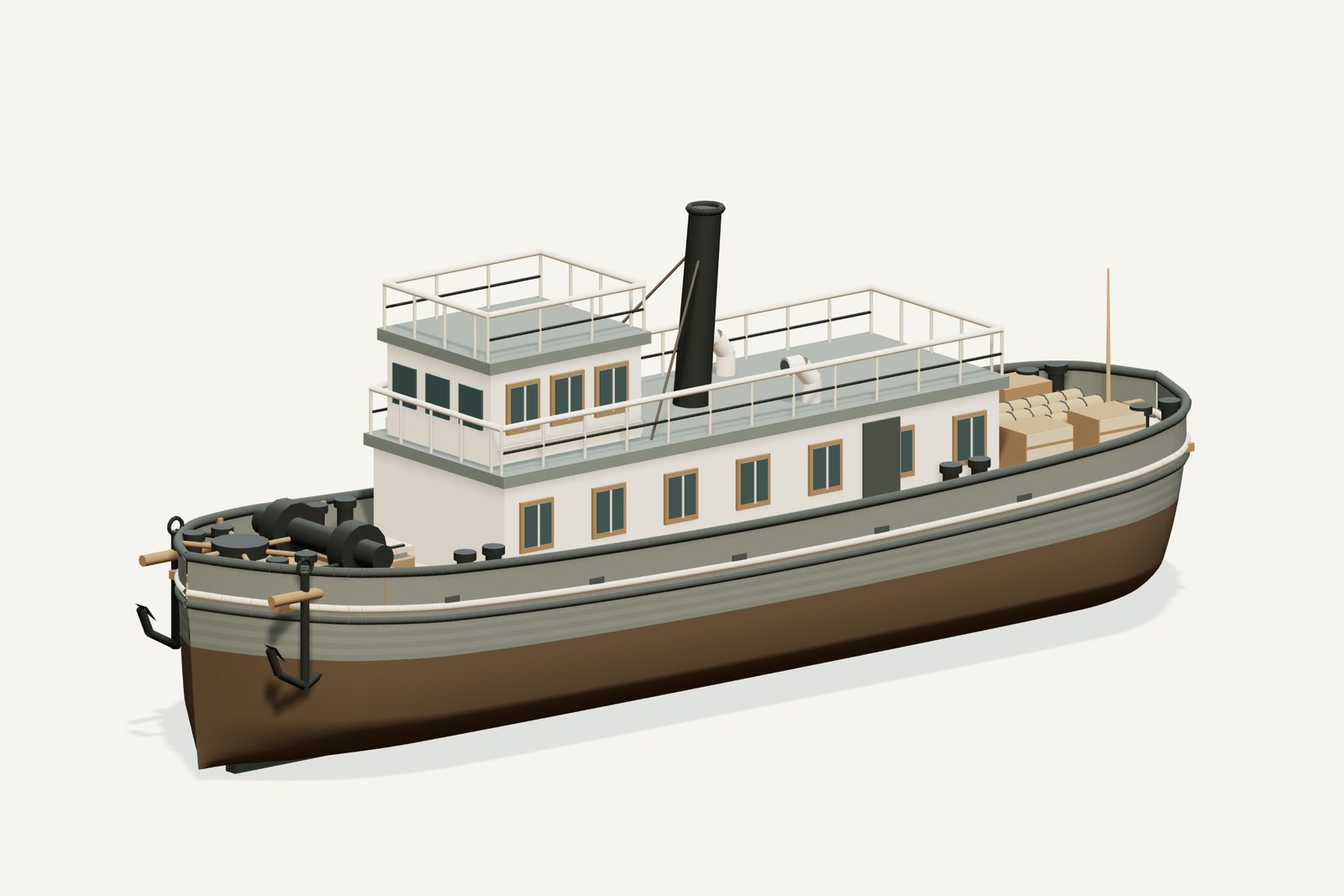
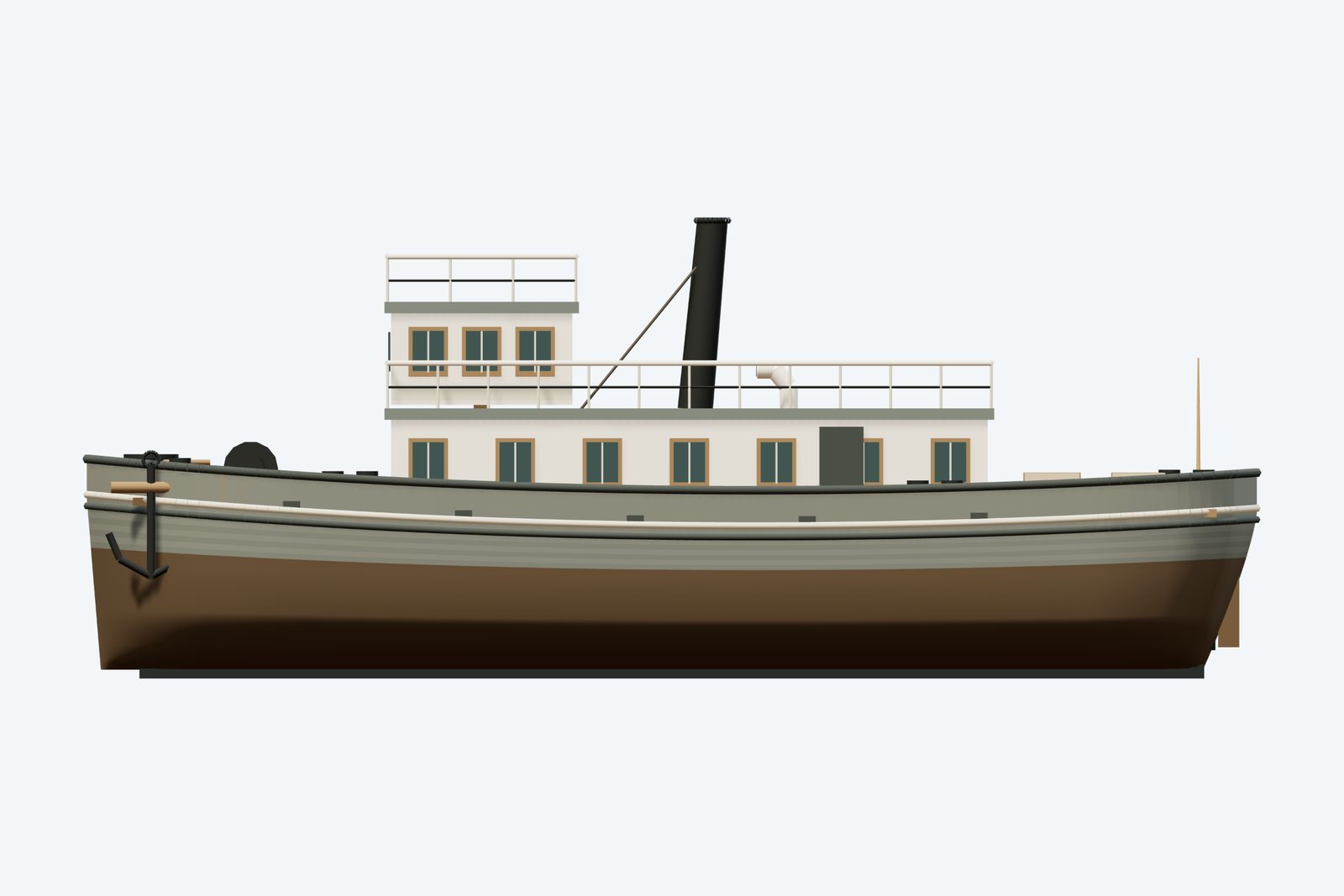
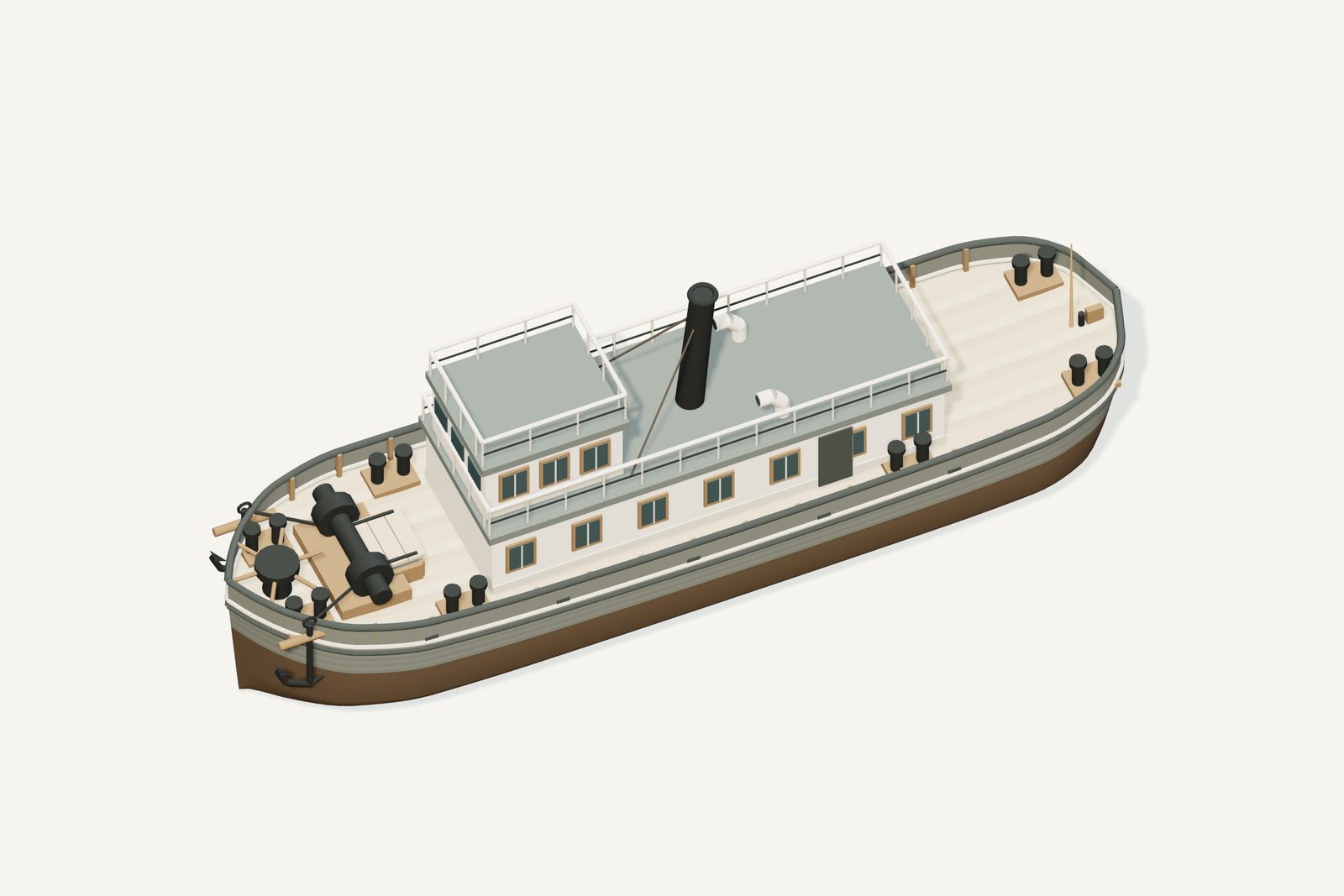
Renders from the model
History, evidence and limits
The research notes behind the reconstruction, reproduced with their citations.
Version 1.1. Metadata and presentation revised September 8, 2026; original evidence review retained.
Selected appearance
Comparison-based fishing career, 1883–1908. A small wooden screw fish tug is documented. This uses the historical compilation’s 17 ft beam; NOAA lists 8 ft, an unresolved conflict. Cabin, funnel and working deck use a closely sized period fish-tug comparison, not a recovered portrait of Maxwell.
Documented evidence
NOAA identifies an 1883 wooden screw fish tug, 67 ft long. NOAA vessel record
A shaft and propeller survive; the 8 ft catalogue beam conflicts with the compilation’s 17 ft. NOAA vessel record
Reasonable interpretation
Underwater hull lines and draft
Exact colors, fittings, hatch layout and rigging routes
Sources and use.
Unresolved uncertainties
No complete original lines plan is claimed. Exact loaded draft, concealed surfaces and fine fittings remain interpreted. The earlier research context below retains the source distinctions used for this reconstruction.
Evidence assessment: build a qualified interpretation. Documentary scale and vessel class, inspected visual sources or close period comparisons support a reasonable overall likeness. This is not an exact or authenticated as-built replica.
Documented baseline and conflicts. NOAA documents an 1883 wooden fish tug, 67 ft long, with screw propulsion supported by the surviving shaft and propeller. Its beam field says 8 ft and its tonnage 43 gross. Swayze’s historical compilation instead gives 67 × 17 × 6 ft and 35 gross tons. This model selects the 17 ft beam and secondary-source 6 ft hold depth; the conflict has not been conclusively resolved. September 19 in NOAA also differs from September 15 in the compilation. No original Maxwell portrait was found.
Comparison-based features and unresolved details. T.H. Camp was a 64.5 ft wooden steam fish tender built in 1876; its inspected photo shows low enclosed accommodation, a raised pilothouse and funnel behind. Those closely comparable dimensions, era and work support Maxwell’s overall interpreted arrangement. A single funnel, enclosed working house, small stern working area, fish boxes and net bundles are comparison-based choices about Maxwell. No measured Maxwell general arrangement was recovered. The concealed boiler and engine are not modeled. Boxes and nets can be hidden for inspection; this is not a claim about a particular voyage’s cargo.
Keep visible alongside the model. A small wooden screw fish tug is documented. This uses the historical compilation’s 17 ft beam; NOAA lists 8 ft, an unresolved conflict. Cabin, funnel and working deck use a closely sized period fish-tug comparison, not a recovered portrait of Maxwell.
Sources
- NOAA vessel record
- David Swayze, Great Lakes Shipwreck Files, M
- Wisconsin Historical Society, T.H. Camp
- Historic T.H. Camp image

Illustration conditions
Illustration setting. Supplemental AI artwork uses a lake background. Weather, waves, light and distant shoreline are artistic scene choices, not evidence of the final voyage or an exact geolocated coastline. Storm and rain scenes never establish historical weather. Direct model renders retain consistent neutral presentation.
Sources used for the model
- NOAA vessel record — source
Identity, scale, career and surviving remains - David Swayze, Great Lakes Shipwreck Files, M — source
Historical compilation gives 67 × 17 × 6 ft and different tonnage/day-of-loss from NOAA. The 17 ft beam is selected explicitly, not silently presented as unanimous. - Wisconsin Historical Society, T.H. Camp — source
1876 wooden steam fishing tender, 64.5 × 14.9 × 6.3 ft, a close size, era and trade comparison. It is a different ship. - Historic T.H. Camp image — source
Inspected low enclosed deckhouse, raised forward pilothouse and a funnel behind it; informs Maxwell only by comparison.
Rights and respect
Removing or disturbing wreckage on Great Lakes bottomlands is a felony under Michigan Part 761, 1994 PA 451, at a fair market value of $100 or more. Positions are historical reference only — not navigation and not dive-planning data. Wreck records are published by the Michigan Underwater Preserve Council.
Treat these as graves. Lives were lost on many Great Lakes wrecks and human remains may still be present. Look, photograph, and leave everything exactly as you found it.
Model and renders were newly made for this project (2026). Three.js r160.1 is used under the MIT licence; its notice ships with the vendored files. Wreck position, depth and dates: Michigan Underwater Preserve Council. The model specification (version 1.1, revised 2026-09-08) is published beside the assets (model-spec.json).