Crayfish
Rusty Crayfish
Faxonius rusticus
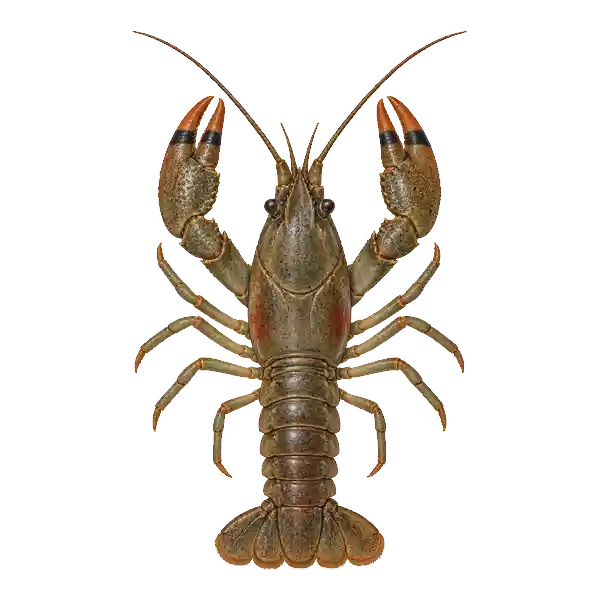
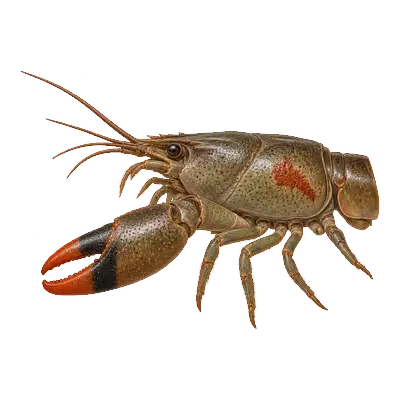
These illustrations are AI-generated, not photographs, and are not to scale. They show what to look for; they are not a substitute for an expert identification.
How to identify it
Size: About 3 to 4 inches long.
- A rusty-red spot on each side of the shell, about where you would hold it between thumb and finger.
- Large, smooth claws with black bands near orange-red tips.
- A gray-green to reddish-brown body.
Don’t confuse it with
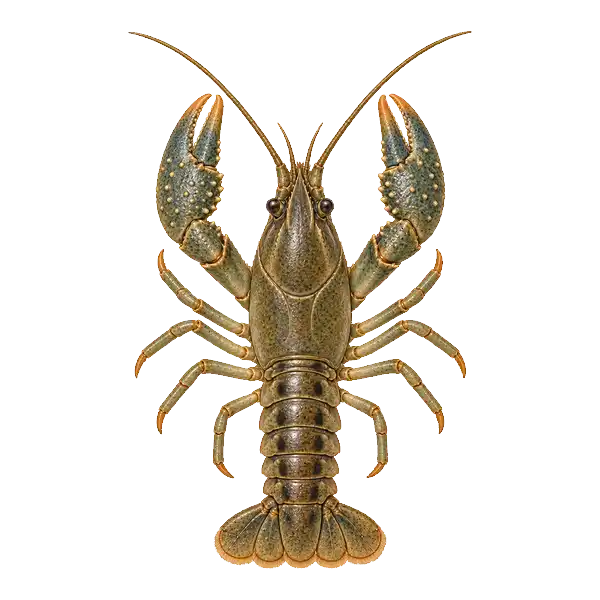
The native virile crayfish has no rusty side spots and often has bluish claws with pale bumps.
Where it came from
Native to the Ohio River basin, including parts of Ohio, Kentucky, Indiana and Tennessee.
Spread mainly by people, especially when leftover crayfish used as bait are dumped into lakes.
Earliest dated Michigan record: 1990, Little Star Lake, Gogebic County. This is the oldest dated record in the USGS non-native species database, not necessarily when it first arrived.
Why it matters
It is aggressive, eats large amounts of aquatic plants, snails and fish eggs, and pushes out native crayfish.
Michigan law
Restricted under Part 413 of Michigan's Natural Resources and Environmental Protection Act. It is illegal to possess, introduce, import, sell or offer to sell it as a live organism, except in the limited cases the law allows. The state uses “restricted” for species already established in Michigan. The state’s page on this species.
If you find it
- Don’t move it. Michigan law requires boaters to remove all aquatic plants from boats, equipment and trailers before launching. Before trailering, you must pull all drain plugs, drain live wells and bilges, and make sure the boat and trailer are free of aquatic plants and animals. What the law requires
- Never release bait. Releasing baitfish into Michigan waters is illegal. Put unused bait in the trash, never in the water.
- Report it. Take a photo, note where you saw it, and report it to the Midwest Invasive Species Information Network (MISIN) or through Michigan’s invasive species program. Experts there can confirm what you found.
- Ask before removing or treating. Treating a lake with herbicides or other chemicals needs a state permit, and some removal work does too. Start with the state’s Aquatic Nuisance Control program before taking action.
Michigan lakes where it has been recorded
10 Michigan lakes on this site have a record of this species.
Alcona
Alpena
Antrim
Charlevoix
Cheboygan
Dickinson
Emmet
Iron
Leelanau
A lake that is not listed may still have it. Records exist only where someone found the species and reported it, so “not recorded” does not mean “not present.”
Lake records: Midwest Glacial Lakes Partnership Conservation Planner; underlying records from the USGS Nonindigenous Aquatic Species database.
Sources
- Michigan Invasive Species Program: Rusty crayfish
- USGS Nonindigenous Aquatic Species: Rusty crayfish fact sheet
- Michigan Compiled Laws, section 324.41302 (prohibited and restricted species)
Earliest dated record: USGS Nonindigenous Aquatic Species database.