Snail
Banded Mysterysnail
Viviparus georgianus · USGS lists it as Callinina georgiana
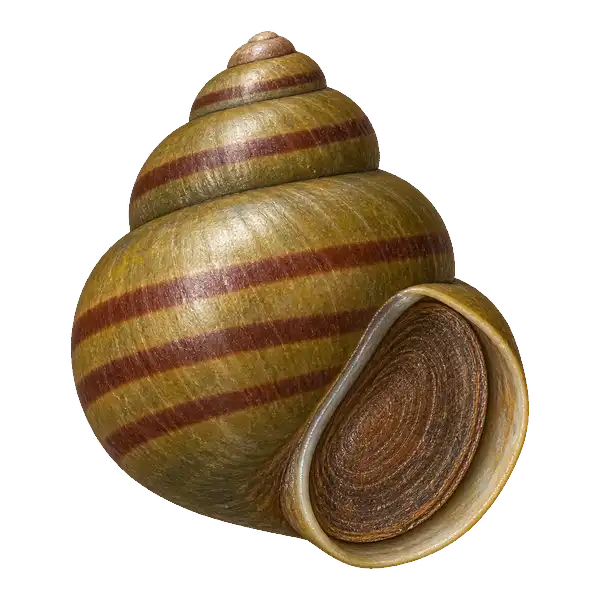
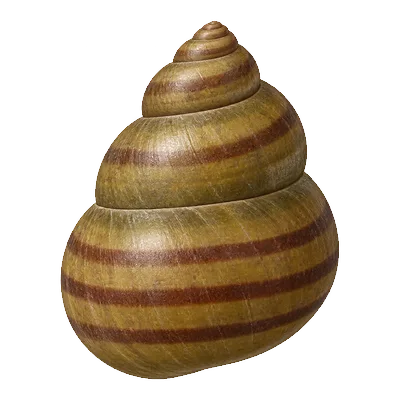
These illustrations are AI-generated, not photographs, and are not to scale. They show what to look for; they are not a substitute for an expert identification.
How to identify it
Size: Shell about 1 to 1.5 inches tall.
- Round, swollen coils with deep grooves between them.
- An olive-yellow to brown shell with three or four reddish-brown bands spiraling around it.
- A shell that coils to the right, with a hard lid that closes the opening.
Don’t confuse it with
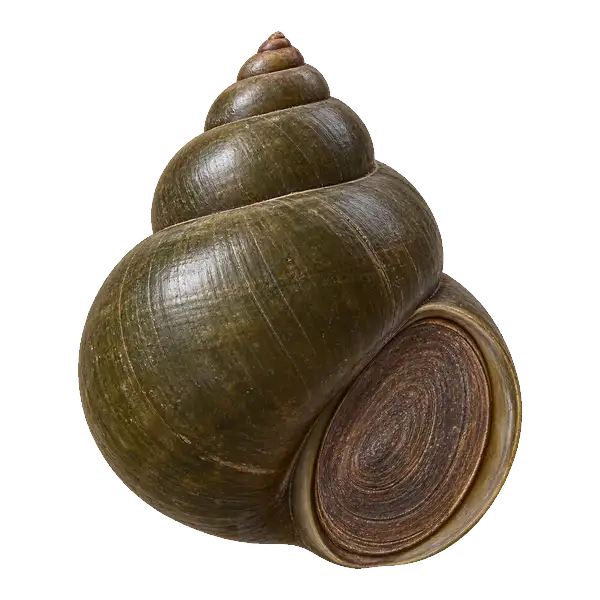
The Chinese mysterysnail, also on this list, is bigger and has no colored bands.
Where it came from
Native to the southeastern United States.
It has spread well north of its native range. Releases from aquariums are thought to be one way it moved.
Earliest dated Michigan record: 1980, Lake Huron. This is the oldest dated record in the USGS non-native species database, not necessarily when it first arrived.
Why it matters
Its effects on Michigan lakes are not well studied. Like other large non-native snails, it can compete with native snails and can carry parasites.
Michigan law
Not on Michigan's list of prohibited or restricted species. The boating and bait rules below still apply to everyone.
If you find it
- Don’t move it. Michigan law requires boaters to remove all aquatic plants from boats, equipment and trailers before launching. Before trailering, you must pull all drain plugs, drain live wells and bilges, and make sure the boat and trailer are free of aquatic plants and animals. What the law requires
- Never release bait. Releasing baitfish into Michigan waters is illegal. Put unused bait in the trash, never in the water.
- Report it. Take a photo, note where you saw it, and report it to the Midwest Invasive Species Information Network (MISIN) or through Michigan’s invasive species program. Experts there can confirm what you found.
- Ask before removing or treating. Treating a lake with herbicides or other chemicals needs a state permit, and some removal work does too. Start with the state’s Aquatic Nuisance Control program before taking action.
Michigan lakes where it has been recorded
32 Michigan lakes on this site have a record of this species.
Antrim
Branch
Cass
Cheboygan
Chippewa
Clare
Clinton
Dickinson
Emmet
Genesee
Hillsdale
Lake
Lenawee
Livingston
Mackinac
Montmorency
Oakland
Ogemaw
Ontonagon
Roscommon
Van Buren
Wexford
A lake that is not listed may still have it. Records exist only where someone found the species and reported it, so “not recorded” does not mean “not present.”
Lake records: Midwest Glacial Lakes Partnership Conservation Planner; underlying records from the USGS Nonindigenous Aquatic Species database.
Sources
Earliest dated record: USGS Nonindigenous Aquatic Species database.